
Plantar Fibroma Treatment
in New York City, NY
Plantar fibromas are benign bumps that form on the arch of the foot, and while harmless, they can cause pain and discomfort while walking. Traditional treatments can be effective in reducing discomfort, but newer methods, such as hyaluronidase injections, offer lasting relief from pain and inflammation.
Table of Contents
- Real Stories: Plantar Fibroma Treatment Patient Reviews
- Plantar Fibroma Treatment Cost in NYC & Flexible Financing Options
- Why Choose Chelsea Foot and Ankle for Your Plantar Fibroma Treatment?
- Book Your Plantar Fibroma Consultation Today
- What Are Plantar Fibromas?
- What Are My Plantar Fibroma Treatment Options?
- What to Expect During Plantar Fibroma Treatment
- Plantar Fibroma Treatment Recovery & Aftercare
Real Stories: Plantar Fibroma Treatment Patient Reviews
“I had my ultrasound-guided hyaluronidase injections via Dr. Ethan Ciment (Chelsea Foot and Ankle in Manhattan). He was my podiatrist for ~10 years before I left Manhattan just a couple of years ago. I now live 4.5 hours away. I contacted his office in January to see if he would be willing to treat my recently emerged fibromas with hyaluronidase. He was knowledgeable, did extra research, and delivered excellent care as usual. I was unable to find a local provider where I now live, and it was worth the trip to visit him again after a few years’ absence. Glad I did it. I will continue my care with him even as it requires long-distance travel. I would highly recommend his practice and encourage you to inquire with his office if you are still seeking care. Best of luck on your journey.”
—Mark H., Facebook
Plantar Fibroma Treatment Cost in NYC & Flexible Financing Options
The cost of plantar fibroma treatment in NYC will vary depending on the number and size of your fibromas, the type of treatment we recommend, and the details of your treatment plan. Each patient is treated individually, and as a third-party-free practice, our podiatrists create custom treatment plans that serve the patient’s best interests without interference from insurance companies. Learn more about your financing and out-of-network insurance options.
Once you meet with one of our experienced podiatrists and they create a customized treatment plan for you, you will receive an accurate cost estimate for your plantar fibroma treatment.
Chelsea
Book Your Plantar Fibroma Consultation Today
Discover relief from plantar fibromas with a customized treatment plan from Chelsea Foot and Ankle. Our podiatrists will tailor treatments to your needs and goals, from minimally invasive hyaluronidase injections to custom orthotics. Call Chelsea Foot and Ankle today at (646) 929-4149 or complete the contact form to request a consultation.
Why Choose Chelsea Foot and Ankle for Your Plantar Fibroma Treatment?
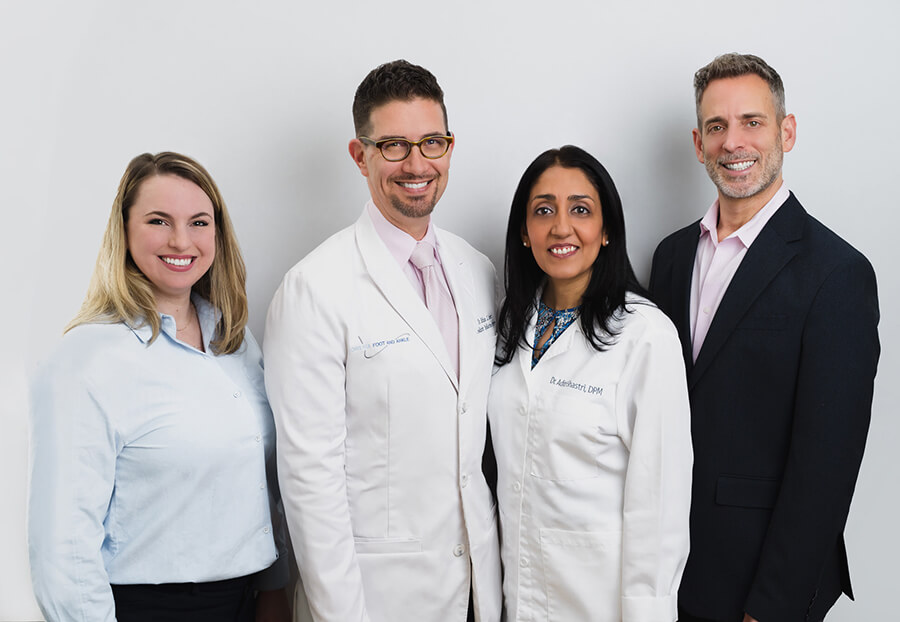
The team at Chelsea Foot and Ankle is dedicated to creating and supporting a boutique, customized approach to podiatric care through individualized treatment plans, transparency between physician and patient, and specialized, exemplary care. Dr. Ciment and Dr. Shastri are experienced podiatrists, offering the full range of podiatric services and surgeries, from sports medicine to diabetic podiatric care and non-surgical therapies.
At Chelsea Foot and Ankle, we are committed to providing a highly customized concierge experience tailored to your individual needs. As out-of-network providers, we can offer a unique approach to care that is most aligned with your needs and our professional opinion, rather than following insurance providers’ directives. At Chelsea Foot and Ankle, your care and our communication are key. We go above and beyond to provide you with the most comprehensive care that will keep you healthy, happy, and on your feet.
What Are Plantar Fibromas?
A plantar fibroma is a benign fibrous knot or nodule that develops in the plantar fascia, the ligament in the arch of the foot that connects the heel to the toes. You might have a plantar fibroma if:
There is a firm but flexible knot or bump under the skin in the arch of the foot.
You are experiencing pain or discomfort when walking.
Plantar fibromas can be caused by repetitive movements or micro-tears in the plantar fascia, although exact causes are unknown. These noncancerous growths are not dangerous, but can grow aggressively and are known to recur after surgical excision.
What Are My Plantar Fibroma Treatment Options?
Your plantar fibroma treatment will depend on your consultation with one of our experienced podiatrists, as well as your current condition, lifestyle, prior conditions, and other factors.
Because plantar fibromas have a high recurrence rate after surgical excision, our team prefers alternative, minimally invasive treatment options. While surgery is a possibility, we opt for more conservative treatment options whenever possible.
Hyaluronidase Injections
Ultrasound-guided hyaluronidase injections offer an effective, minimally invasive treatment that reduces the size and softens plantar fibromas. As surgical excision often leads to scar tissue formation and recurrence of fibromas, this method offers long-lasting symptom improvement. Hyaluronidase is an enzyme that breaks down the dense connective tissue that makes up the nodules. When dissolved, the nodules are softer and less prominent, reducing pain and discomfort.
Non-surgical Therapies
Some patients may benefit from or prefer non-surgical therapies to reduce the prominence of their plantar fibromas. Many of these options can be used in tandem with others, such as hyaluronidase injections.
Options include:
- Custom orthotics, which offset pressure and redistribute weight away from the fibroma
- Topical gels or creams, used to stop the growth of the nodule and soften the tissue
- Physical therapy for stretching the calf muscles and plantar fascia to reduce tightness and help relieve discomfort
Surgical Excision
Surgery is typically reserved for severe cases where the mass is causing disabling pain or continues to grow even after non-surgical or minimally invasive treatments. During surgery, a large portion or all of the fibroma is removed via incisions on the bottom of the foot.
What to Expect During Plantar Fibroma Treatment
Plantar Fibroma Consultation
Before treatment, you’ll meet with one of our podiatrists: Dr. Ciment or Dr. Shastri. During this meeting, they will discuss your current condition, your level of pain, any limitations in mobility, and any prior treatments you’ve undergone. They will examine your foot to assess the fibroma and, based on your conversation and their findings, recommend a treatment plan.
Plantar Fibroma Treatment
Your specific treatment will depend on your needs, condition, and goals. In most cases, our team will recommend a less invasive option before surgery. Dr. Ciment is one of the few podiatrists in the area to offer hyaluronidase injections as fibroma treatments, and has seen encouraging success with this newer treatment option.
We’ll break down the hyaluronidase injection treatment steps below.
- For your comfort, your foot will be numbed with a local anesthetic.
- Your surgeon may use a combination of hyaluronidase (the enzyme solution) with a steroid to help reduce inflammation.
- An ultrasound is used to visualize the fibroma’s size and location, ensuring precise treatment.
- Lastly, the hyaluronidase solution is injected into the nodule.
Surgical excision is also performed using local anesthesia, where your surgeon will make careful incisions around the fibroma and carefully excise the tissue from the foot.
Plantar Fibroma Treatment Recovery & Aftercare
Following your hyaluronidase injections, downtime and recovery are minimal. Most patients can walk independently immediately after treatment, although some tenderness is common. Your surgeon will recommend a certain number of treatment sessions depending on the size and depth of your fibroma. Most patients will require two to four injections, spaced about three to six weeks apart, for the best results.
Following surgery, you will be given specific aftercare instructions, which may include wearing a post-surgical boot to protect your healing foot, avoiding walking or putting pressure on your foot for several weeks, and resuming normal activities after about three weeks.

Our Patients Love Us
An absolutely amazing experience. Dr. Ciment is an absolutely wonderful person – it is very evident that he truly cares about his patients.
What a pleasure to meet Dr. Shastri. She was extremely personable, listened intently and actually was able to treat my condition to a fair extent in the first sitting.
Highly recommend her.